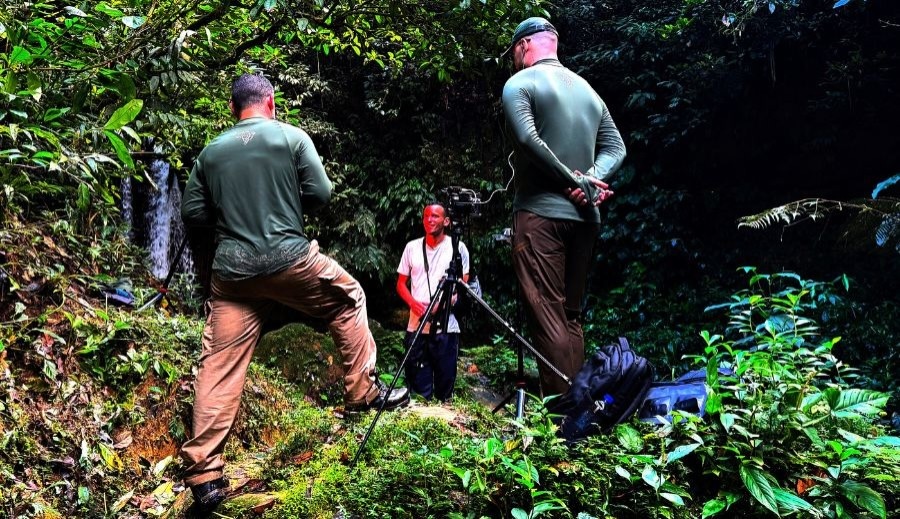
More than challenges, the solutions and answers to the problems in the Amazon region are also in the territories. Based on the knowledge of the efforts and initiatives of different communities, six journalism organizations are working together to give more visibility to the voices and projects developed in six countries located in the Pan Amazon.
With support from Fundación Avina, journalists and communicators from the six organizations are mapping sources of knowledge – such as researchers and local leaders – to strengthen the Vox Amazon Source Bank. The tool, free and available on the website, has undergone an update and will now also include profiles of people and organizations from all nine countries that make up the Pan Amazonia.
Through cooperative work, the Source Bank, which currently has more than 1,400 profiles, will have at least 100 more registrations, with about twenty registrations from each country of the organizations that make up the Pan Amazon Lessons project.
The collaborative project includes Muy Waso (Bolivia), Amazônia Vox (Brazil), Agenda Propia (Colombia), Pluma Verde (Ecuador), Servindi (Peru) and Historias que laten (Venezuela).
In addition to the mapping and inclusion in the Source Bank, which allows for greater agility and connection of journalists, communicators, and producers of events and content with genuinely local sources in the Amazonian territories, the project will also have a journalistic series.
Each outlet will produce a report from the perspective of Solutions Journalism, presenting initiatives that respond to the challenges of the territories. The thematic focus in this first season will be stories that involve the forest economy, with projects that generate income and focus on community entrepreneurship, with preservation and appreciation of local biodiversity.
The mapping and production of the reports is already underway and the publication is expected in early December 2026. In addition to a special website with the reports, the content will also be published on the websites of the organizations that are part of the project and distributed to other journalism sites. Publications will also be made on social networks with the stories, which will have text and images directly from the Amazonian territories of the six countries.
Learn a little more about each participating organization below:
Bolivia
Muy Waso - www.muywaso.com - @muywaso
Bolivian laboratory of experimentation in journalism and communication for social transformation. It is not a conventional vehicle: it is an ongoing editorial experiment that seeks to lay the foundations of the Bolivian journalism of the future. Its principles: creative, collective, independent and self-managed.
Brasil
Amazônia Vox - www.amazoniavox.com - @amazoniavox
The Amazônia Vox initiative seeks to contribute to a greater Amazonian protagonism in the narratives produced about the region. It has developed and updates a Bank of Knowledge Sources about the region with more than 1.5 thousand registrations and a database of communication freelancers, with almost a thousand registered professionals. It also produces journalistic content with the perspective of Solutions Journalism, to give greater visibility to local initiatives that respond to the challenges of the region.
Colombia
Agenda Propia - www.agendapropia.co - @agenda_propia
An independent investigative and intercultural journalistic co-creation vehicle in Latin America with 15 years of experience. The focus is on coverage of the care of territories, from a community perspective that values traditions, ethnic diversity, knowledge and living memories. She investigates human rights violations and aggressions against Mother Earth, such as socio-environmental conflicts, extractivism, and other impacts on living and spiritual beings. From Colombia, she produces stories about the realities of indigenous peoples, peasants, Afro-descendants, and other social groups. She leads the Red Tejiendo Historias (Weaving Stories Network), a community of intercultural narrators in Latin America.
Ecuador
Pluma Verde - www.pluma-verde.com - @plumaverdeec
First Ecuadorian digital outlet specializing in environment, climate, and solutions journalism. We cover socio-environmental stories with rigor, independence, and always highlighting the voices of the territories. We seek to promote debate, find common ground, and bring seemingly complex issues closer to a wider audience.
Peru
Servindi - www.servindi.org - @servindi.historias
The organization is a non-profit association founded in September 2002, dedicated to intercultural communication and the strengthening of the indigenous movement. Its purpose is to give voice to the stories, struggles and knowledge of indigenous peoples, especially in Peru, and to accompany their demands in the public sphere. She works with investigative journalism with a focus on solutions, in addition to working in the monitoring of indigenous organizations for the exercise of collective rights, in the management of knowledge and systematization of experiences and with political and social advocacy.
Venezuela
Historias que laten - www.historiasquelaten.com - @historiasquelaten
It is an independent digital outlet from Venezuela, based in Caracas, specializing in narrative journalism and solutions journalism that promotes journalistic innovation with the purpose of telling constructive stories that connect and inspire Venezuelans. It investigates, documents, and narrates with the rigor of journalism how Venezuelans face the challenges that affect them through responses that are examples of citizenship building, social innovation, or that change is possible.
About Avina Fundación
Avina is a Latin American philanthropic organization with a global reach that has been promoting collaborative processes for more than 30 years to generate impact in favor of human dignity and care for the planet. Avina identifies opportunities for impact and helps transform them into processes of systemic change. To this end, it co-invests, monitors, and articulates initiatives in three areas of impact: climate action, democratic innovation, and a fair and regenerative economy.


Comentar