
Este artículo se realizó originalmente para ThinkLandscape en colaboración con Agenda Propia.
Rosa Elena Hernández, 65, has been teaching her culture for 37 years. Every morning at eight o’clock, this Indigenous Inga teacher takes eight girls and boys for a walk around her community in the Blasiaku reservation, which means “river of monkeys” in her native language, Inga Kichwa.
In this 67-hectare reserve, the mornings are hot and humid. Thirty-four families live here, in the municipality of Villagarzón, Putumayo, in the Colombian Amazon.
The hamlet is arranged around a soccer field. Just a few steps away lies the community’s territory, which also serves as its school: the vegetable garden, the medicinal plants, an açaí plantation, the tambo – the traditional house – and the forest.
The children receive lessons not only in the classroom but also in the vegetable garden, in the forest and by the river.
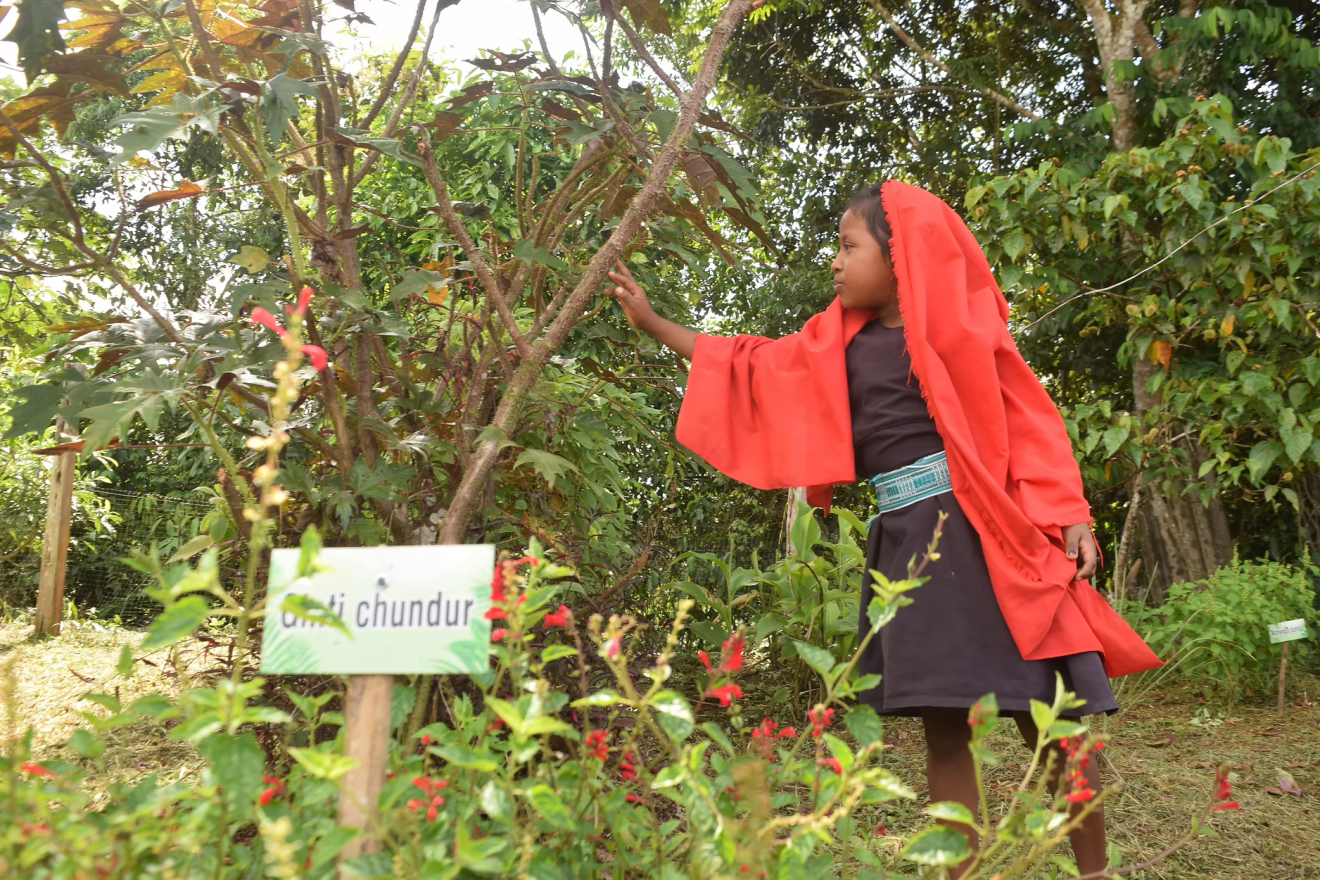
A limoncillo (Melicoccus bijugatus) plant – a type of aromatic grass with soothing properties – brings the walk to a halt. The children observe it intently.
“Is this a living thing?” Hernández asks.
“It’s alive!” the girls and boys answer in unison.
The teacher tells them about plants as living beings that are born, feel, grow and also die, pointing to a nearby plant whose dried-out part contrasts with the green of its leaves.
“What did the old man say?” she asks again.
The children recall the teaching of Vicente Jacanamejoy, the iacha, or traditional healer: plants are living beings, so before cutting them, you must ask their permission.
“That’s right,” says Hernández.
Then she tells them something else. Every plant has a spirit that protects it and can also heal. That’s why, before taking it, you must let it know, ask its permission and thank it.
This is how knowledge is passed down among the Inga people: within their territory and based on traditional knowledge. The journey also serves another purpose.
The children apply mathematical concepts, identify plants, interpret the messages the land conveys to them (such as the cycles of the moon), use both their own traditional tools and Western ones to develop social skills, and learn to create sustainable enterprises.
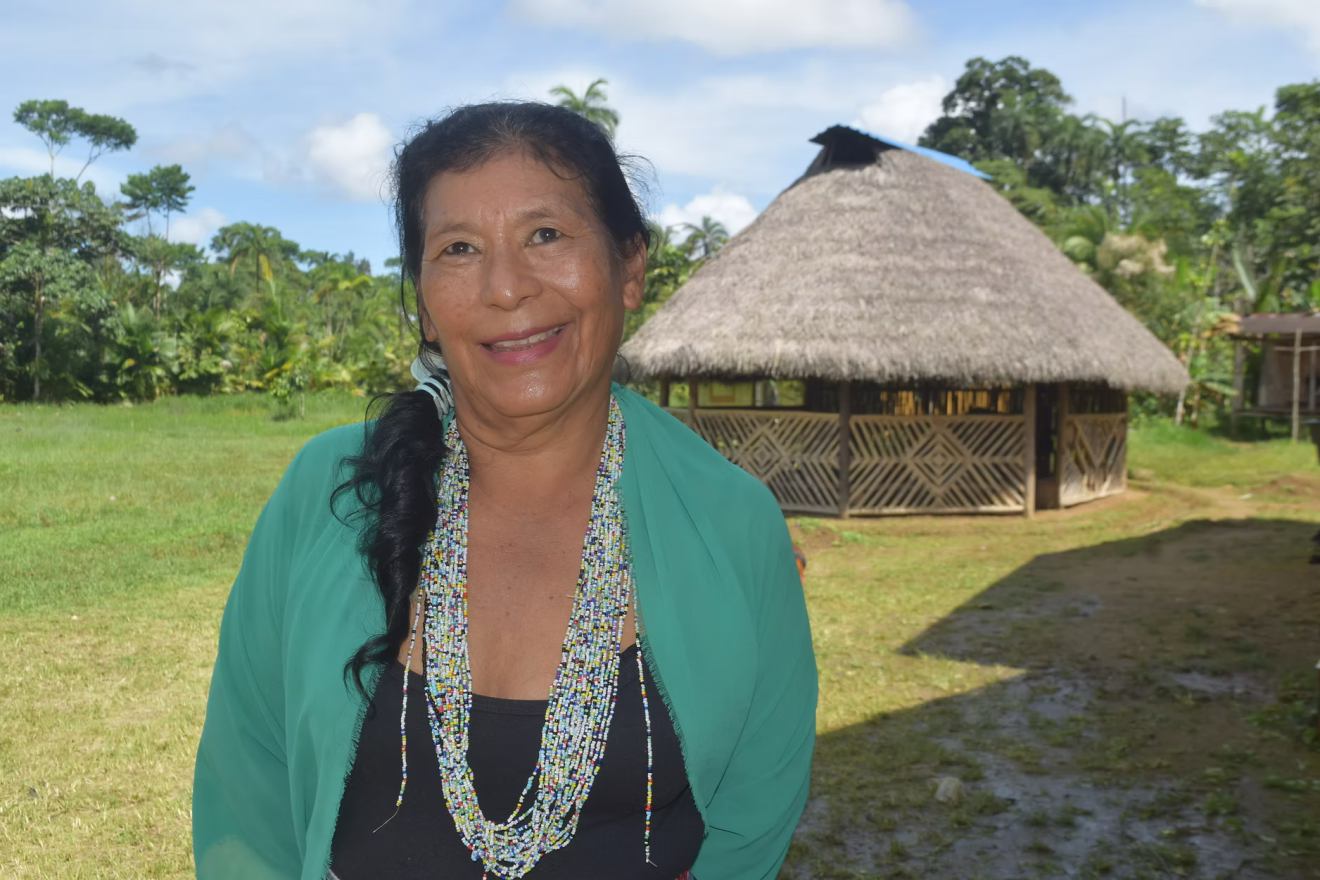
Rosa Elena Hernández, docente Inga, de la Institución Educativa Rural Bilingüe Atun Ñambi, sede Blasiaku, y líder del emprendimiento escolar Kindi Tarpui.
Paola Jinneth Silva Melo.An education that endures through time and space
Blasiaku’s school is one of the ten campuses of the Atun Ñambi Bilingual Rural Educational Institution – “great path” in the Inga Kichwa language – which implements a unique educational model developed by the Inga people in the Amazonian departments of Caquetá, Nariño, Cauca and Putumayo.
Hernández was part of that struggle. “It was about winning a right because it gave us the chance to choose how we want to teach,” she says.
Self-directed education is also a response to a history marked by colonization, evangelization and the displacement of families, which led to the loss and fragmentation of cultural practices, according to the Inga People’s Safeguarding Plan.
Today, the Inga people are at risk of physical and cultural extermination due to Colombia’s long-running armed conflict. They also face pressures on their territory from deforestation and oil interests. In this context, self-determined education has become a strategy for survival.
Over the past 20 years, Colombia’s 115 Indigenous Peoples have fought to ensure that their knowledge is protected through self-directed education, securing rights such as Decree 2500 of 2010, which allows them to administer their own education, and Decree 0481 of 2025, which recognizes and establishes the Indigenous Self-Directed Education System (SEIP).
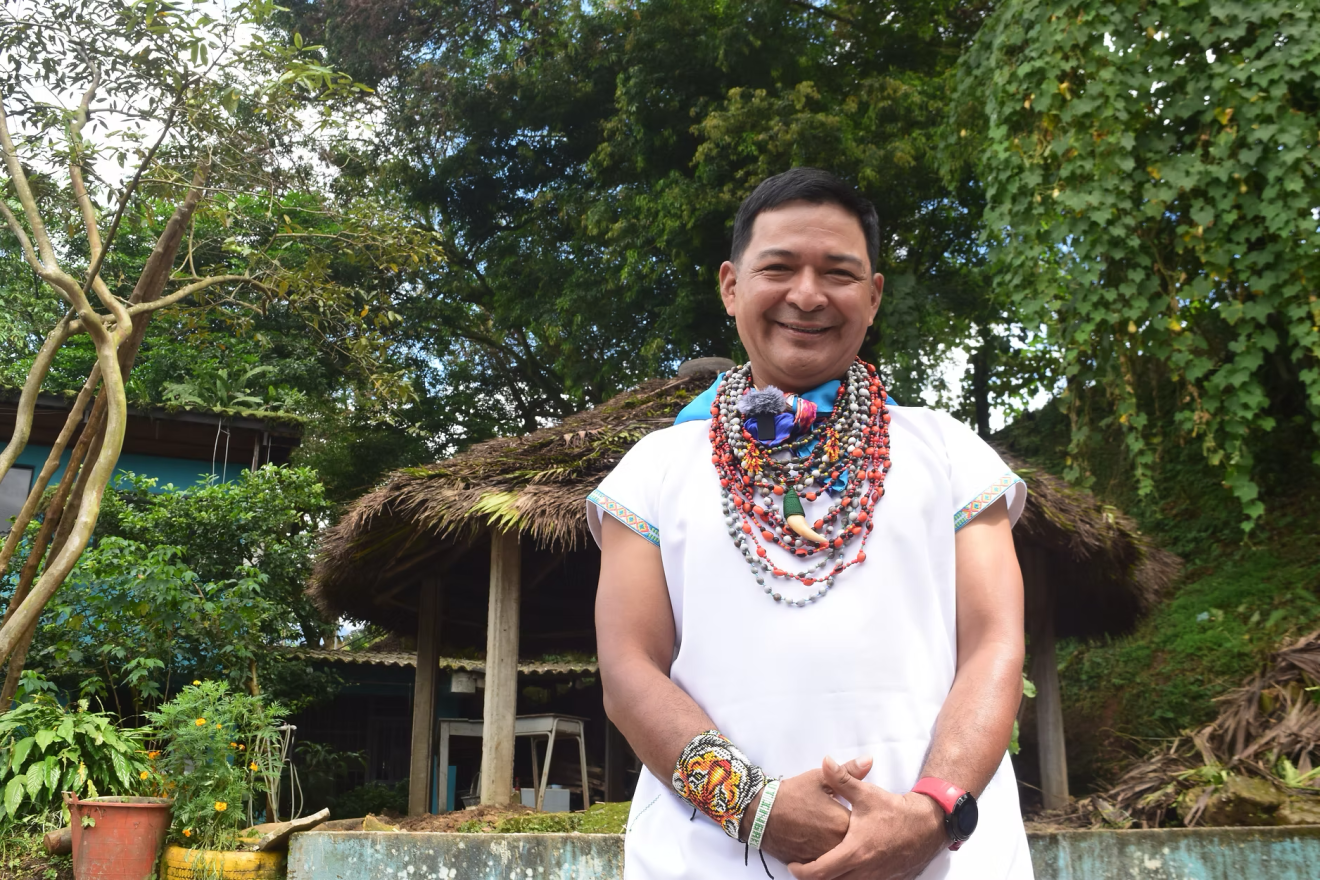
Taita Juan Carlos Mutumbajoy, líder del sistema de educación propia del pueblo Inga del Putumayo. Foto: Paola Jinneth Silva
It was along this path that the spiritual leaders of the Inga people spearheaded the 2019 founding of the Ingakuna Sugllapi Tukuspa Temporary Union, currently led by Juan Carlos Jacanamejoy, a taita, or practitioner of ancestral medicine.
In 2020, the union began overseeing education through its first four educational institutions, including Atun Ñambi.
“We are encouraging everyone to work together so that we can continue teaching future generations so that, over time, we Ingas will continue to speak our language, nourish ourselves with what our Mother Earth provides and continue to protect our territory,” says Mutumbajoy.
Currently, the program serves 1,267 students across seven schools and 31 locations, supported by 30 facilitators who fulfill spiritual, cultural and educational roles.
But the true significance of this education is best understood when it’s passed on to future generations.
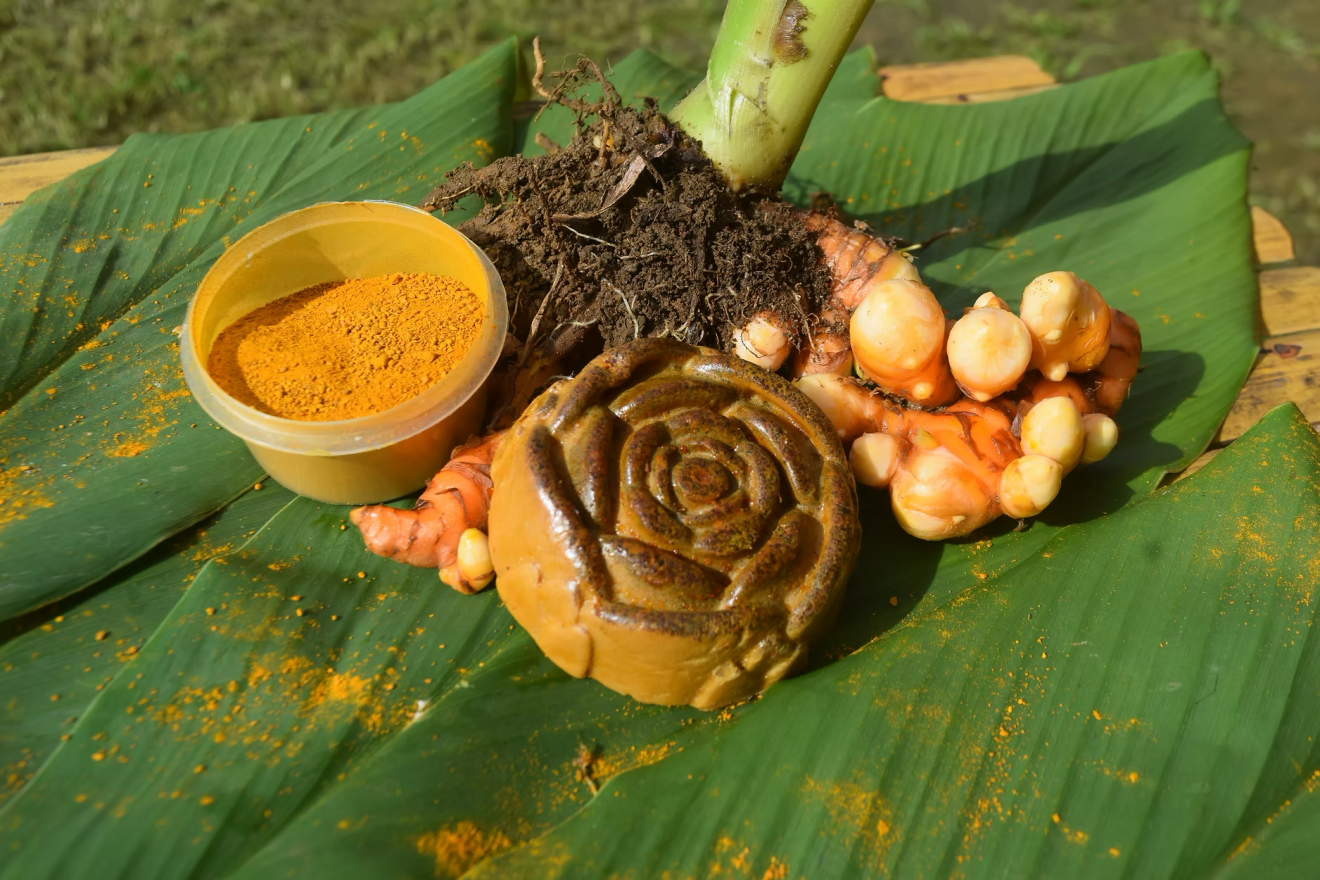
De la planta al jabón: raíz y polvo de cúrcuma, un ingrediente natural utilizado por los niños y niñas de Blasiaku en la elaboración de sus productos. Foto: Paola Jinneth Silva.
Paola Jinneth Silva Melo.De la planta al jabón: raíz y polvo de cúrcuma, un ingrediente natural utilizado por los niños y niñas de Blasiaku en la elaboración de sus productos. Foto: Paola Jinneth Silva.
From the field to the lab
The children cut the limoncillo and take it to a room that serves as a lab. There, they separate the fresh leaves from the dry ones and run them through a machine that grinds them up.
The resulting material goes into a distiller. The water boils, the steam rises and then condenses until the oil is separated from the plant.
The children ask how much does it weigh? How much water do they need? How long should it be heated for?
After half a day, the results appear in a small bottle: limoncillo essential oil.
It’s not just a product. It’s also a way of learning.
They have also made soaps, shampoos, creams, baskets, traditional brooms and handicrafts, among other items.
These creative processes all begin similarly: walking through the land with their grandparents, listening to their words, touching, feeling, harvesting, crafting, testing and finally taking what they’ve learned to fairs as part of a school-based venture: Kindi Tarpuy.
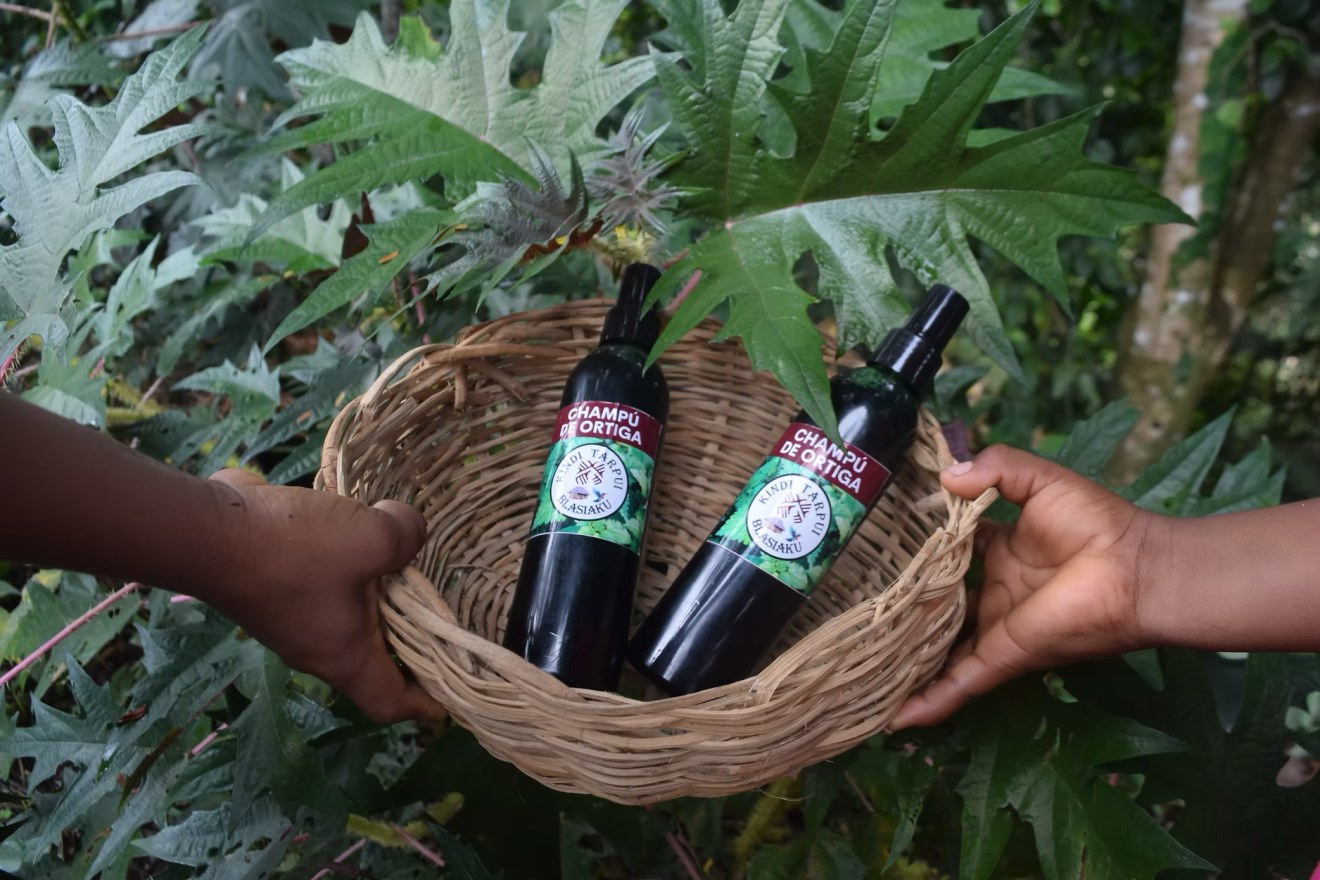
De la planta al producto: ortiga y champú elaborado por las niñas y los niñas de Blasiaku, presentado en un canasto tejido por ellos mismos.
Paola Jinneth Silva Melo.Learning by experiencing culture
“Kindi is a hummingbird, a bird that brings good news and knowledge to the Inga people, and tarpuy means ‘to plant,’” explains Hernández.
This entrepreneurial initiative began 10 years ago, when the community of Blasiaku donated a hectare of land to the school. Families and children planted chontaduro palms (Bactris gasipaes). As time went on, the harvest arrived, and the fruits were sold.
This project allowed students from different grades to observe a plant’s life cycle. Now, they’re complementing that experience with a young açaí crop that a new generation is beginning to watch grow.
“We also had pigs and laying hens,” Hernández recalls. “The children loved counting how many eggs they collected.”
Two years ago, with the support of the SEIP, the Kindi Tarpuy collective was established, which strengthened the process the community had been building.
“We recognized the need to form a group and pass that knowledge on to the younger generations so that this knowledge would be passed down to our children, and so that they, too, in about 20 or 30 years, could share it with the community,” says Jesús Arbey Jojoja Quincho, spiritual leader of the Atun Ñambi educational centers.
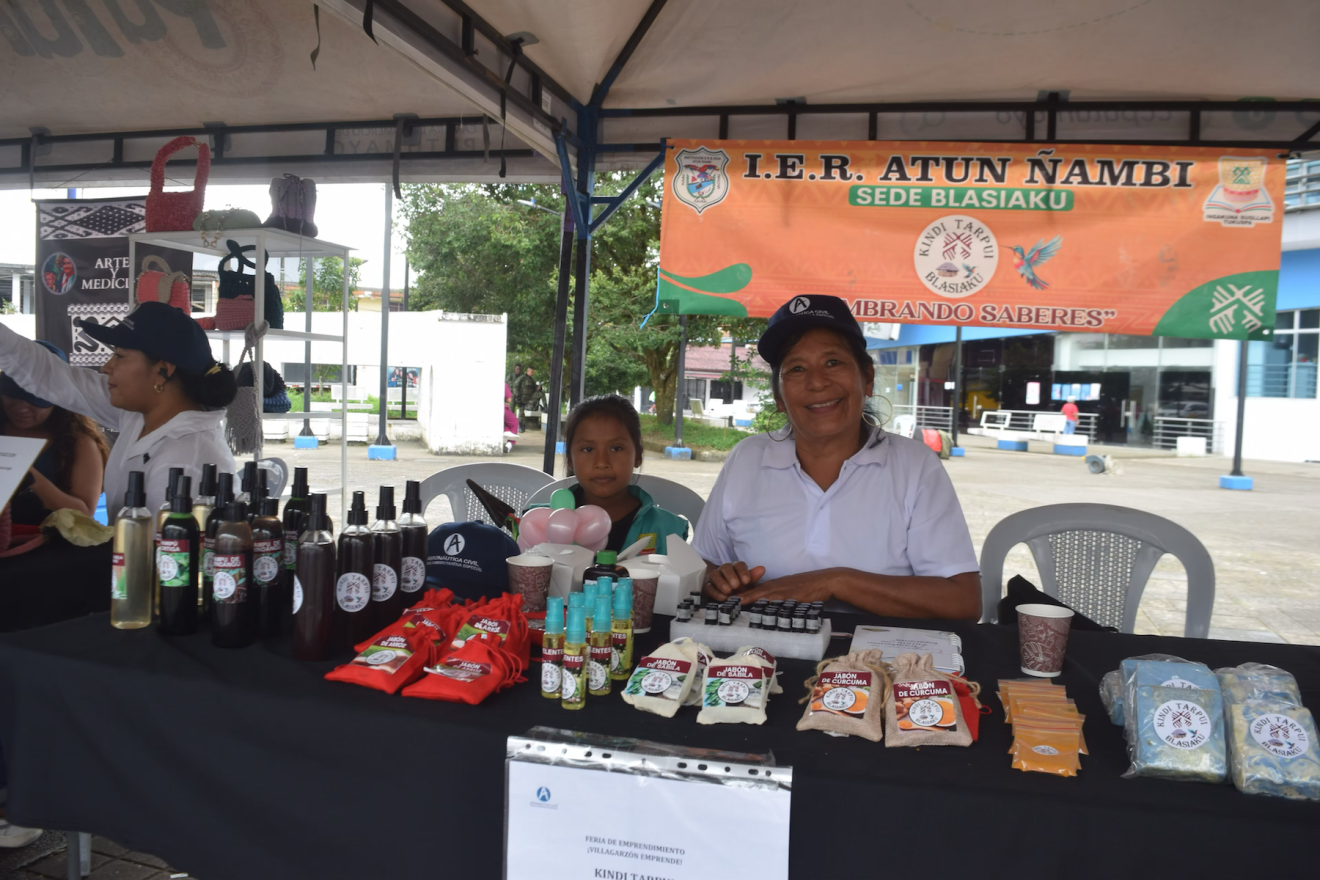
Stand de Kindi Tarpuy en una feria municipal en Villagarzón, Putumayo.
Paola Jinneth Silva Melo.The learning continues once the products leave the lab. At fairs, the children also help with sales: they learn to recognize the value of the product, receive money, keep track of their earnings and learn to calculate how much is invested and how much can be earned from a sale.
As such, an activity that began with a plant ends up becoming a lesson in math, economics and community organization.
In Blasiaku, everything the community does is guided by the Ambiwaska or Yagé remedy. “It’s a natural, medicinal plant that we prepare, and it helps us spiritually to guide and strengthen the territory,” says Yolanda Jacanamejoy, governor of the reservation.
For an Inga, she emphasizes, the spiritual practice of taking Ambiwaska begins in the mother’s womb and is accompanied by the spiritual healer: her father, the iacha Vicente Jacanamejoy. “This medicine strengthens and purifies the body and helps us connect well with the land.”
Amanda Jacanamejoy, chief mayor and mother, emphasizes that this educational process has been valuable because she is learning from her children: “They know about the ecological calendar and the lunar cycles, and they’re the ones who tell us at home, ‘Mom, it’s not the right time to cut that plant.’ So they teach us, too.”
On a shelf in the lab, you can see soaps, shampoo, baskets and oils that the children have made. “We dream that Kindi Tarpui will become a community-based enterprise,” says Hernández.
Returning home
Before the day ends, the children return to the classroom: the one with desks, a blackboard and calendars, but also the one with walls adorned with Inga symbols, their own baskets, a bodoquera – wreaths woven from wool – and chontas, or staffs that represent positions of authority in the student government.
The students present drawings of the plants they’ve used at Kindi Tarpuy.
Eight-year-old Chely Pakari drew rosemary and aloe vera. “We found these plants in the garden, and they’re used to make soap and shampoo. We also extract rosemary oil,” she says before sitting down.
Another classmate takes her place. “I drew the yachapo, a tree we find in the garden that’s used to make shampoo. I also drew achiote, which is used to make creams, to add color to soup and to beautify the face,” says nine-year-old Catalina Córdoba.
Next, 10-year-old Dana Jacanamejoy participates with a drawing of rosemary.
Juan Carlos Jacanamejoy shows the stinging nettle, a plant that, according to the iacha, is used to remove negative energy and bad air. He also talks about horsetail, which is used to extract oils.
Five-year-old Lyvis draws aloe vera with her mom’s help. She says it’s used to make shampoo for bathing.
Finally, nine-year-old Tomás shows a drawing depicting his classmates inside the tambo (traditional house) making soap.
The school day is coming to an end. The girls and boys leave the classroom, but first they gather to sing a farewell song in their native language:
Saia chisunchi iachaita
Let’s share our knowledge
nukanchi wawa kunata
with our boys and girls
mana iviarispalla Kausangapa (bis)
so as not to be forgotten.
Atun sachakunata kuchununa
They felled the big trees
angu wiñarispa tugtunakun
the roots grow and flourish
kai mana rimaglla kancha
this isn’t just talk
kaipi terpunakunchi
we are here planting
nukanchi manaskasina
what we want
mana iviarispalla kausangapa (bis)
so as not to be forgotten
It’s there that every day, Hernández finds an answer to how to remain in time and space without ceasing to be who they are: by returning to the land, to traditional medicine, to their language and to the knowledge that has served as educational tools sustaining life in the region for generations.


Comentar